Value generation from waste streams and by-products as a lever for the circular economy
How could we transform waste streams and by-products (organic and non-organic) generated throughout Carozzi’s operations into new sources of value—products, ingredients, energy, or operational efficiencies—through circular models that are economically viable and scalable ?
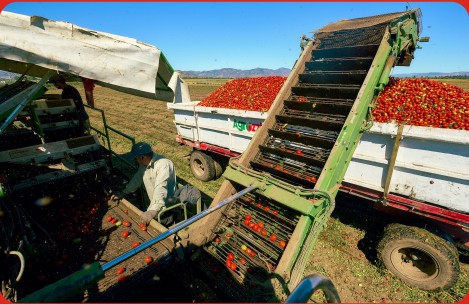
As an integrated, multi-category agri-food group, Carozzi participates throughout the entire value chain, including agricultural operations, raw material processing, and industrial production. This integration generates significant and continuous streams of by-products at different stages, particularly in categories such as tomato sauces and fruit compotes and concentrates, which represent a concrete and significant volume base for developing circular economy models.
What is expected of the solutions
We are looking for technological solutions and circular models (not consulting) that enable the recovery of waste and by- products in one or more of the following areas:
Upcycling ingredients, materials, or products
Technologies for converting organic by-products, especially those of plant origin, into functional ingredients, fibers, proteins, oils, extracts,flavorings, etc.
Solutions for generating new materials (biomaterials, biopolymers, inputs) from waste streams.
Revaluation in food and/or non-food categories (where regulatory feasible).
Energy recovery and operational efficiency
Production of energy or inputs (biogas, biomass, heat, alternative fuels) from organic waste.
Technologies for reducing waste, concentration, drying, separation, or stabilization to facilitate utilization.
Solutions that reduce disposal costs and improve productivity (fewer stoppages, less waste, higher yield).
Circular models
Take-back models, industrial symbiosis, or alliances for intercompany circularity.